Saturday, 10 March 2018

Advertising Production Process

Advertising Production Process


Pre-production

Summarize your goals for the advertisement in a creative brief for your advertising agency, or the staff members who will produce it for you. Define the target market, clarify your message and state the specific action you would like its members to take, such as to visit your website or call a toll-free number. Include your budget, timeline and any specifications on where and when you want the advertisement to run. Specify the particular television station, publication or radio show. Suggest images or phrases that might help achieve your goals.

Production

The creative process begins in earnest once you hand over the brief. The advertising professionals will work up proofs, or in the case of commercials, storyboards, that bring your ideas to fruition. Review the preliminary concepts for consistency with your ideas and their ability to achieve your goals. Avoid cost overruns by confirming in advance how many revisions you are entitled to before incurring additional charges. Ensure that the final advertisement includes the necessary contact information, as well as any needed mention of pricing or a special offer.

Post-production

Check the publication you have contracted with to confirm that your advertisement has run according to the agreed upon terms. If you ordered color, it should not be in black and white. Similarly, watch or listen to your broadcast advertisement. Television and radio stations specify when your commercials will run. Make sure that they do. Track any corresponding increase in phone calls or web traffic. Consider running the advertisement again if the response was strong. Contemplate tweaking your strategy, or starting the advertising production process anew if the results disappoint you.

Read More:http://smallbusiness.chron.com/advertising-production-process-45162.html

Thursday, 8 March 2018

Role of Advertising in Marketing Communication

Role of Advertising in Marketing Communication


Marketing communications are the means by which organisations attempt to inform, persuade, and remind consumers about products, services, or brands. Marketing communications inform and make consumers aware about the availability of the product or service, about its usage, price and special offers. Marketing Communications attempt to persuade potential consumers to purchase and try the product. Marketing communications can also be used to reinforce experiences, or to remind consumers about their needs and their past experiences related to the product with a view to convince them for repurchases. Marketing communication also differentiate products in markets where there is little to separate competing products and brands.

Advertising is a paid form of a non-personal message communicated through the various media by industry, business firms, nonprofit organisations, or individuals. Advertising is persuasive and informational and is designed to influence the purchasing behavior and/or thought patterns of the audience.

The advertising message has to reach a billion people, speaking different languages, practicing many religions. Advertisers can reach their audiences through television, radio, cinema, print medium, outdoor advertising, sales promotion and the Internet. Hence, advertising is a form of mass communication.

Read More:http://www.enotesmba.com/2013/10/role-of-advertising-in-marketing-and-process-of-advertising.html

Wednesday, 7 March 2018

HOW COMPANIES ARE PUTTING ADVERTISING PROCESS CONTROL TO WORK

HOW COMPANIES ARE PUTTING ADVERTISING PROCESS CONTROL TO WORK


Advertising is inherently a creative process, and creativity is often associated with a free-form approach to the development of ideas and concepts. The implementation of those ideas, however, should not be free form. In fact, research shows that ad campaigns benefit greatly when marketers use a tightly controlled implementation process to help them maximize results and minimize waste.
To help marketers execute their ad campaign processes, Dan Beltramo, Nielsen’s EVP of Product Leadership, led a recent webinar with several marketing experts to discuss the concept of advertising process control. The session also gave the group an opportunity to share some best practices for consistent campaign performance.

GET YOUR ADVERTISING PROCESS UNDER CONTROL

To generate consistent high performance across an organization, Beltramo emphasized the strengths of advertising process control. Process implementation within an organization isn’t a new concept, however, applying a standardized process to advertising to increase efficiencies is a new way to approach campaign execution.
To implement this process across your organization, consider the following:
  • Start with an understanding of where your process currently stands.
  • Choose a set of objective-appropriate metrics and consistently measure these metrics across every campaign you run.
  • Compare these metrics against an internal, organization-wide benchmark or an external, industry-wide benchmark.
  • The resulting data will tell you not only how your advertising is doing, but also how consistently you are producing those results.
  • Chances are these results will uncover some variance in your advertising performance.
  • Take action to lower your variance by tightening up your advertising process—dig into exactly what steps your organization takes, or doesn’t take, to implement advertising campaigns.
  • Identify steps or campaign elements that need improvement, and take the time to document and apply best practices. Doing so will allow you to create a well-thought out, scalable process for implementing advertising that consistently generates high performance.

By focusing on and refining how to generate results, marketers can develop clearly defined steps and campaign elements that help them focus on executing consistently high-performing advertising campaigns.

ADVERTISING PROCESS BEST PRACTICES

By leveraging results across Nielsen Digital Brand Effect studies in the consumer packaged goods (CPG) category, Nielsen identified Horizon Media and Collective as companies that consistently drive high-performing campaigns. Given their track records, executives from each company shared best practices for creating and implementing advertising processes to reliably produce these results.
Mary Shirley, Horizon’s SVP of Digital Media Activation, highlighted the importance of each step of the advertising process—planning, implementation and refinement. She says that during the planning phase, Horizon has found it essential to engage with all campaign stakeholders as early as possible to ensure that each campaign is set up for success. In her experience, she says campaign execution works most efficiently when the advertising, media planning and research goals are all aligned. It’s also important for their process to remain flexible enough to accommodate custom campaign elements that may affect performance. Overall, Horizon continuously finesses their internal process by documenting insights from each campaign and sharing best practices across the organization.
Gregory Friend, Collective's Senior Manager of Measurement Solutions & Insights, emphasized the importance of knowledge management in his organization to create a strong foundation of process implementation. With its detailed analytical process, Collective can leverage both qualitative and quantitative insights from past campaigns to inform campaign planning and execution. The company encourages teams to remain curious to find out the “why” behind campaign performance so insights are continuously developed and applied to future campaigns. By acknowledging the importance of collaboration and education, Collective has been able to develop an implementation process to set its campaigns up for success.
Read More: http://www.nielsen.com/us/en/insights/news/2015/how-companies-are-putting-advertising-process-control-to-work.html

Saturday, 3 March 2018

Advertising vs Promotion


Advertising is a one-way communication whose purpose is to inform potential customers about products and services and how to obtain them. Promotion involves disseminating information about a product, product line, brand, or company. It is one of the four key aspects of the marketing mix. Advertising may be one form of promotion.

Comparison chart

Advertising versus Promotion comparison chart
Edit this comparison chartAdvertisingPromotion
TimeLong termShort term
DefinitionOne-way communication of a persuasive message by an identified sponsor, whose purpose is non-personal promotion of products/services to potential customers.A Promotion usually involves an immediate incentive for a buyer (intermediate distributor or end consumer). It can also involve disseminating information about a product, product line, brand, or company.
PriceExpensive in most casesNot very expensive in most cases.
Suitable forMedium to large companiesSmall to large companies
SalesAssumption that it will lead to salesDirectly related to sales.
ExampleGiving an advertisement in the Newspaper or TV about the major products of a companyGiving free products, coupons etc.
PurposeBrand Building, Continuity, Brand switch, Switching backAttract new tries or brand switchers, Reward loyal customers, Increase sales and repurchase rates.
ResultSlowlyvery Soon
ApproachUnique to product/serviceNot necessarily unique to product/service
Nature of appeal to the consumerAdvertising is emotional in nature and the objective is to create an enduring brand image. Perfumes, makeup and jewelery need imaginative advertising to create the allure needed to sell these products.Sales promotions, on the other hand, are unemotional in their approach. A cents-off coupon for cereal appeals to the consumer's rational mind and is a sales promotion. The consumer weighs the price of one cereal brand versus others.
ObjectiveBuilding brand image and boosting sales.Short term sales push.
MeaningAdvertising is a technique of driving public attention towards a product or service, through paid network.The set of activities that spread a word about the product, brand or service is known as promotion.
CommunicationOne way ProcessTwo way process
StrategyPromotional strategyMarketing strategy

Differences in Timeframe

Promotions are time specific and may be short term while advertising may be generically long term. For example: ABS company may start a promotion of giving free drinks at a mall for a day during the festive season, while the same company may advertise much before about their drink at the start of the festive season and extend it during and beyond the season. Advertising is aimed towards the long term building of the brand while Promotion is aimed at the short term tactical goal of moving ahead in sales.

Types of promotion and advertising

Promotion is generally divided in two parts:
  • Above the line promotion: Promotion in the media.
  • Below the line promotion: All other promotion. Much of this is intended to be subtle enough that the consumer is unaware that promotion is taking place. E.g. sponsorship, product placement, endorsements, sales promotion, merchandising, direct mail, personal selling, public relations, trade shows.
Advertising can be of the following types:
  • Media: Commercial advertising media can include wall paintings, billboards, street furniture components, printed flyers and rack cards, radio, cinema and television ads, web banners, mobile telephone screens, shopping carts, web popups, skywriting, bus stop benches etc.
  • Covert Advertising: Covert advertising is when a product or brand is embedded in entertainment and media. For example: John Travolta wearing only "Diesel" clothing in a movie.
  • Television Commercials: Virtual advertisements may be inserted into regular television programming through computer graphics. It is typically inserted into otherwise blank backdrops.
  • Internet Advertising: This is the newest form of advertising wherein web space is used and email advertising is used. On the internet, there is often an overlap of advertising and promotion on sites like Indiegogo and Kickstarter, where individuals and small businesses try to raise funding for their ideas, often in exchange for promotional items or items that feature advertising of the product/company.

Relationship of Sales with advertising and promotions

Typically promotions are directly linked with sales while advertising is an assumption that it may lead to sales. For example: Giving 20% discount on products may attract a customer and induce instant sale while giving a general brand creation advertisement in the newspaper may not induce immediate sale.

Cost of advertising vs promotion

Promotions are directly linked to sales and hence for small companies it may be easier to use promotional methods. Advertising may be more expensive for small companies and it may not be feasible for them while in advertising it is being assumed that adverts will lead to sales.
For example: A store may give 20% discount on its products which may increase sales while the same shop may find it difficult to advertise this in various medias.

Read More: https://www.diffen.com/difference/Advertising_vs_Promotion

Makkani Productions - We are one of the best Advertising agencies in Kerala & Creative Advertising Agencies in Calicut which undertakes all designing and development works including Brochures, Branding, Logos, Corporate events & Video Productions
Tags: Advertising Agencies in CalicutAdvertising Agencies in India, Advertising agency in India, Advertising Agencies in UAE, branding company in Calicut, branding agency in Calicut, Branding agency in Kerala, creative Ad Agency in Kerala, Ad agency in UAE

Thursday, 22 February 2018

The Key Differences Between Marketing and Advertising


You will often find that many people confuse marketing with advertising or vice versa. While both components are important they are very different. Knowing the difference and doing your market research can put your company on the path to substantial growth.
Let's start off by reviewing the formal definitions of each and then go into a deeper explanation of how marketing and advertising differ from one another:

Advertising Is One Slice of the Pie

The paid, public, non-personal announcement of a persuasive message by an identified sponsor; the non-personal presentation or promotion by a firm of its products to its existing and potential customers.
Advertising is a single component of the marketing process. It's the part that involves getting the word out concerning your business, product, or the services you are offering. It involves the process of developing strategies such as ad placement, frequency, etc.
Advertising includes the placement of an ad in such mediums as newspapers, direct mail, billboards, television, radio, and of course the Internet. Advertising is the largest expense of most marketing plans, with public relations following in a close second and market research not falling far behind.
The best way to distinguish between advertising and marketing is to think of marketing as a pie, inside that pie you have slices of advertising, market research, media planning, public relations, product pricing, distribution, customer support, sales strategy, and community involvement.
Advertising only equals one piece of the pie in the strategy. All of these elements must not only work independently but they also must work together towards the bigger goal. Marketing is a process that takes time and can involve hours of research for a marketing plan to be effective. Think of marketing as everything that an organization does to facilitate an exchange between company and consumer.

Marketing Is the Other Slice

Marketing is the systematic planning, implementation, and control of a mix of business activities intended to bring together buyers and sellers for the mutually advantageous exchange or transfer of products. It's a step-by-step process that begins with a unique selling proposition — a compelling sentence that describes your business. This proposition then acts as a guiding theme, mission, which helps you identify target clients who are interested in your products and services. 
Once you figure out who your target audience is, your marketing plan will then help you map out a strategy to best position your products and services. And after these strategies and tactics are developed, you will be ready to focus on an advertising strategy that will help you explain, teach and promote your products and services to different audiences in film, television, newspapers and magazines, the Internet, and other mediums. 
Read More: https://www.thebalance.com/marketing-vs-advertising-what-s-the-difference-2294825

Makkani Productions - We are one of the best Advertising agencies in Kerala & Creative Advertising Agencies in Calicut which undertakes all designing and development works including Brochures, Branding, Logos, Corporate events & Video Productions
Tags: Advertising Agencies in CalicutAdvertising Agencies in India, Advertising agency in India, Advertising Agencies in UAE, branding company in Calicut, branding agency in Calicut, Branding agency in Kerala, creative Ad Agency in Kerala, Ad agency in UAE

Tuesday, 20 February 2018

Why advertise on Facebook?

Facebook advertising


At last count, more than two billion people were using Facebook. And those users are highly engaged with the content posted on the network: More than 800 million people like something on Facebook every single day.
Of course, when it comes to getting the biggest bang for your advertising buck, too large an audience can actually be a bad thing. After all, you only want to pay to expose your brand to people who might be interested in doing business with you. Fortunately, Facebook offers multiple layers of targeting, so you can focus your Facebook ads on exactly the right audience for your business to maximize ROI.
We’ll get into the specifics of targeting Facebook ads later on in this post, but for now keep in mind that Facebook’s huge, global audience combined with the ability to target your ad by demographics, location, interests, and behaviors allows you to access the exact people who are most likely to want to buy your products or services.
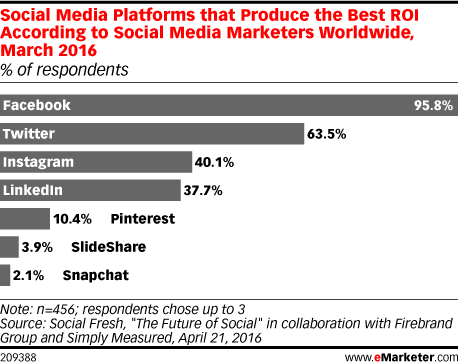
Need more convincing? Consider this: 95.8 percent of social media marketers worldwide said Facebook provides the best ROI of all social platforms.
Facebook advertising
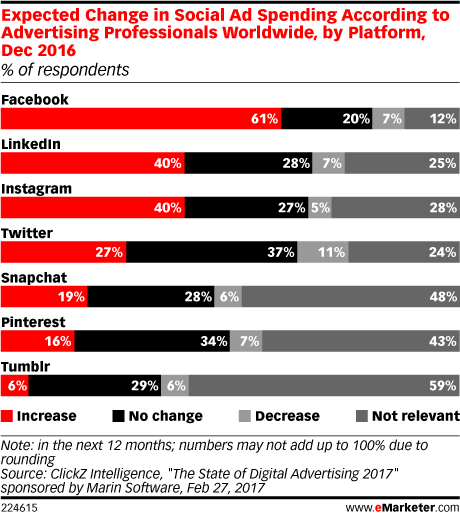
Perhaps it’s no surprise, then, that close to two-thirds of advertisers worldwide plan to increase their Facebook advertising spend in 2017.
Facebook ads
With your competitors already seeing meaningful results from Facebook ads and increasing their spend, it’s high time to develop a Facebook advertising strategy of your own.
Read More: https://blog.hootsuite.com/how-to-advertise-on-facebook/

Makkani Productions - We are one of the best Advertising agencies in Kerala & Creative Advertising Agencies in Calicut which undertakes all designing and development works including Brochures, Branding, Logos, Corporate events & Video Productions
Tags: Advertising Agencies in CalicutAdvertising Agencies in India, Advertising agency in India, Advertising Agencies in UAE, branding company in Calicut, branding agency in Calicut, Branding agency in Kerala, creative Ad Agency in Kerala, Ad agency in UAE

Thursday, 15 February 2018

3 Types of Advertising Media Available to an Advertiser


(1) Direct Mail:


This is one of the oldest types of advertising media for advertising agencies. Under this method message is sent to the prospective buyers by post. A mailing list is prepared for this purpose. Circular letters, folders, calendars, booklets and catalogues are sent under this type of advertising. In the sales letter an appeal is made to the buyers separately.

(2) Newspapers and Magazines:

These are the important forms of press advertising, newspapers are the most effective and powerful medium of advertising. Newspapers contain valuable information with regard to different current events. It may be referred to as ‘a store house of information’. There are daily, bi-weekly and weekly newspapers. Newspapers have widest circulation and read by many people. The newspapers may be local, provincial or national.

Magazines:

Magazines or periodicals are other important media of communication. Magazines may be released weekly, monthly, quarterly, bi-annual or annual. These are read with more interest by the readers as compared to newspapers. Advertisements given in magazines are more descriptive and attractive. They are usually in coloured form which depicts the product nicely and gives lasting impression to the reader.

(3) Radio Advertising:

Radio advertising is very popular these days. The advertisements are broadcasted from different stations of All India Radio. Radio advertising can be explained as “word of mouth advertising on a wholesale scale”. The advertising messages can be in different regional languages.
The most important advantage derived from radio advertising is that it covers every type of listener whether illiterate or educated. It is a very effective medium for popularising on mass scale various consumer articles. The coverage of this medium is wider extending to a large number of listeners. It ensures quicker repetition.
For More: http://www.yourarticlelibrary.com/advertising/9-types-of-advertising-media-available-to-an-advertiser/25870
Makkani Productions - We are one of the best Advertising agencies in Kerala & Creative Advertising Agencies in Calicut which undertakes all designing and development works including Brochures, Branding, Logos, Corporate events & Video Productions
Tags: Advertising Agencies in CalicutAdvertising Agencies in India, Advertising agency in India, Advertising Agencies in UAE, branding company in Calicut, branding agency in Calicut, Branding agency in Kerala, creative Ad Agency in Kerala, Ad agency in UAE

  Creative Branding Are   you look for best advertising agency in calicut ,kerala , here we introduce a new face of digital marketing “Ma...